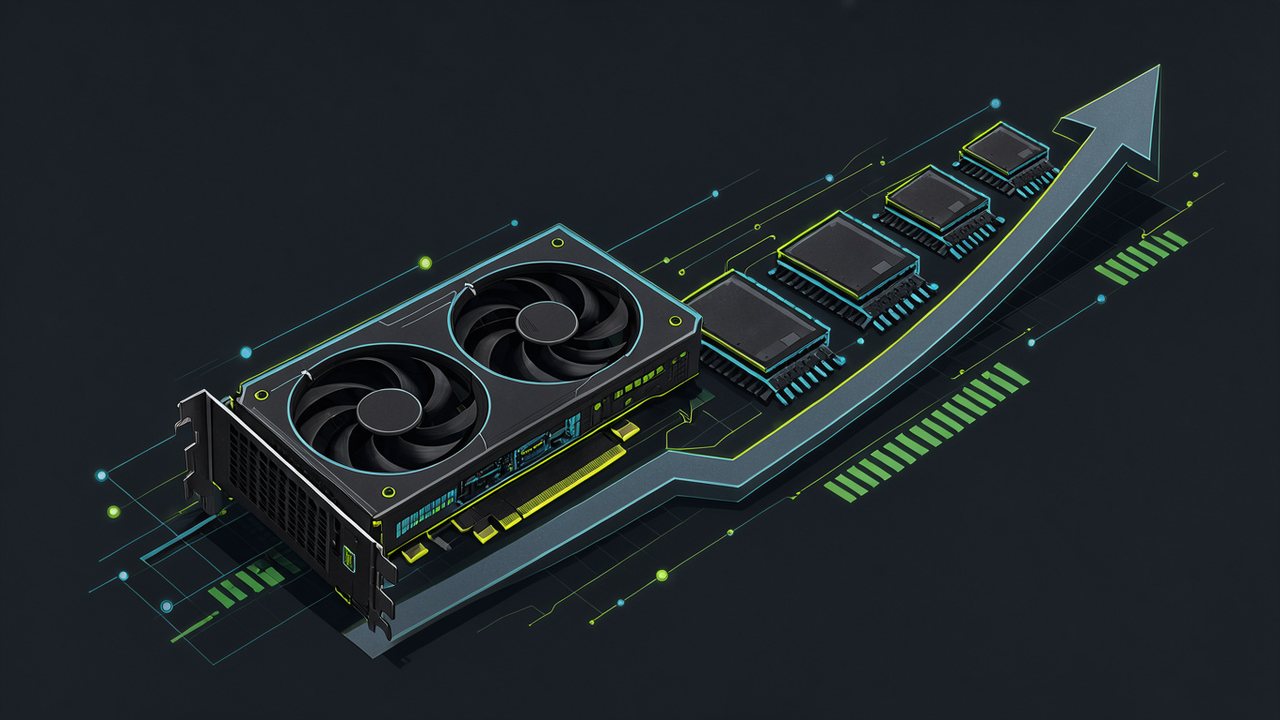
A leak points to steep price hikes on Nvidia’s RTX cards amid the memory crisis. We break down what it means for your wallet.
Bad news for anyone thinking about building or upgrading a PC. A leak from the Asian supply chain points to MSI preparing very aggressive price hikes on Nvidia graphics cards. In the worst case, we’re talking about adding more than a thousand dollars to the price of an RTX 5080. It’s not a confirmed figure, so take it with a pinch of salt, but the market is not heading anywhere good.
The claim comes from a ChannelGate post, a common source of Asian supply-chain rumors, picked up by Wccftech via leaker Harukaze5719 on X. There is no official statement from MSI or Nvidia, so treat it as a rumor, not a shelf price. Even so, the context makes it believable.
How much GPUs could rise

The numbers in the leak, listed in Chinese yuan and converted to dollars, paint an ugly picture, especially at the high end:
- RTX 5080: a hike of 1,300 to 8,000 yuan, equal to between $200 at best and roughly $1,200 at worst.
- RTX 5070 Ti: a rise of $120 to $600.
- RTX 5070: between $75 and $150.
- RTX 5060 and 5060 Ti: bumps of around $50.
The hit lands at the top, exactly where it already hurts. In the US the RTX 5080 sits around $2,000, so a worst-case increase would push it toward $2,500 or even $3,000. The most worrying one is the RTX 5070 Ti: it started as a sensible buy and already trades above $1,400 at retailers like Newegg or Micro Center. Add the maximum hike and you’re near $2,000 for a card that’s supposed to be upper mid-range.
Why everything is climbing: the memory crisis
The root cause isn’t the GPU, it’s the RAM. Demand for memory from AI data centers is swallowing global production and making everything with memory chips more expensive, graphics cards included. Micron has already warned that the crisis will get worse in 2027 and 2028, so this doesn’t look like a passing bump.
That’s the number that truly matters for your wallet: if prices keep climbing for two years, waiting is not free. The quiet increase has been underway for months, and this leak just previews the next step.
What it means if you play
If you have a decent GPU, hold. The worst time to buy is exactly when the supply chain announces hikes, because retailers adjust before the new stock even arrives. If you genuinely need a card, the logic flips: buying now usually beats waiting, and the coming Black Friday is your best window.
It also pays to look beyond Nvidia. The AMD RX 9070 GRE briefly appeared below its recommended price on November 9, almost unheard of this year, though the deal didn’t last. At the other extreme, RTX 5090s have been missing or absurdly priced for weeks.
Mid-range is what suffers most. An RTX 5060 with a fifty-dollar bump is still affordable, but if the RAM and SSDs inside the same PC also get pricier from the very same crisis, the total cost of a new build balloons. The problem isn’t one part, it’s the whole picture.
And be wary of this month’s “deal” prices. Many retailers raise the reference price right before a discount, so an apparent Black Friday bargain can end up costing more than the card did a month ago. Always compare against the historical price, not the crossed-out one.
The takeaway for anyone spending money on gaming: if you were waiting for the RTX 5070 Ti to drop, mark the calendar the other way. It’s far more likely to go up than down.
Sources: TechRadar, Wccftech, Harukaze5719.



Be the first to leave a comment